Profiling Evil
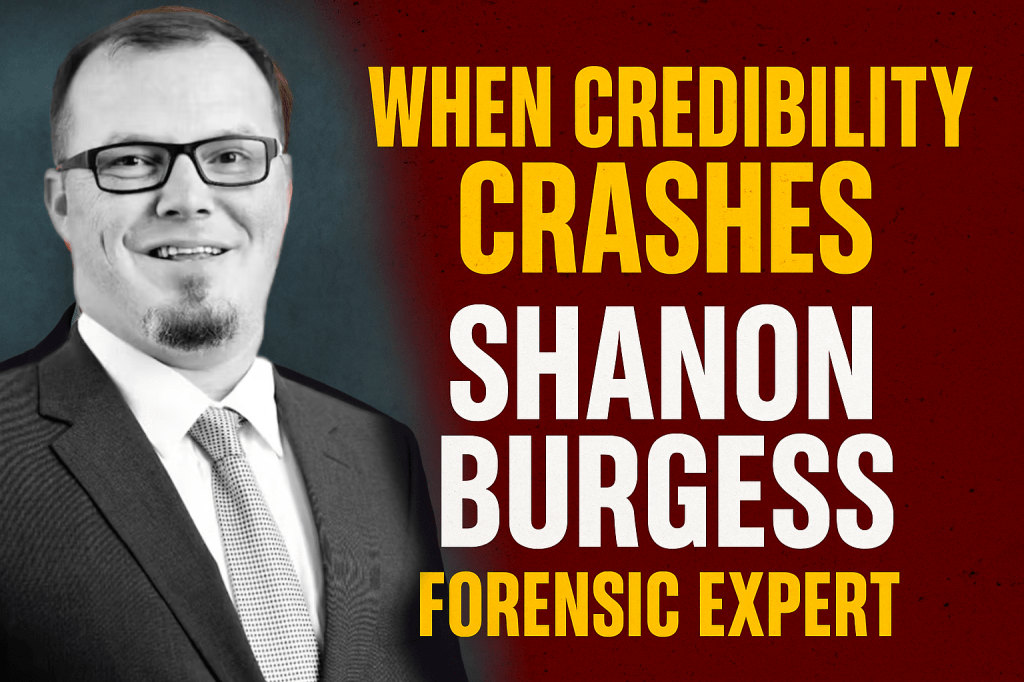
When prosecutors in the Commonwealth of Massachusetts put digital forensics expert Shanon Burgess on the stand in the high-stakes Karen Read murder trial, they probably expected him to bolster their case—not become its Achilles’ heel. But instead of delivering ironclad testimony, Burgess delivered something else: a blow to the prosecution’s credibility that is already echoing through the courtroom and beyond.
Why? Because it turns out the Commonwealth’s star digital forensic analyst falsely claimed to hold a bachelor’s degree in Mathematics and Business Administration from the University of Alabama at Birmingham. That assertion appeared in his LinkedIn profile and—perhaps more concerning—in his submitted curriculum vitae (CV) used to qualify him as an expert witness in this very trial.
Under oath, Burgess admitted that he had not received that degree. Instead, he holds an Associate of Applied Science in Computer Networking from Wallace State Community College, which he completed in 2015. His supposed 2022 bachelor’s degree is simply nonexistent—a fabrication. This is not a minor discrepancy. This is resume fraud. And it has significant implications for the case and for the justice system at large.

The Expert Who Wasn’t
To be clear, the justice system relies on expert witnesses like Shanon Burgess to help jurors understand complex forensic data. Their job is to interpret, clarify, and lend credibility. And it’s precisely that word—credibility—that now lies in tatters.
According to his CV, Burgess touted himself as a seasoned forensic examiner with nearly a decade of experience, presenting at major conferences and training law enforcement worldwide. His résumé reads like a tech-savvy crime fighter’s dream. But once you learn he falsified the most basic element of academic achievement—his college degree—it casts a shadow over everything else he claims to have done.
And apparently, Burgess knew the walls were closing in. Shortly after his testimony and the public revelation that his degree was a fiction, he deleted his LinkedIn profile entirely. It’s gone. Vanished. Just like the degree he said he had.
Why This Matters for the Karen Read Case
Let’s not sugarcoat this: the prosecution put a falsifier on the stand and presented him as an expert. This isn’t just an embarrassment—it’s a legal liability.
Any defense attorney worth their salt will now use Burgess’s fabrication to question the integrity of the forensic findings he presented. Did he manipulate or misinterpret digital data from the Lexus SUV involved in John O’Keefe’s death? That remains to be litigated. But at minimum, the defense can now argue that if he lied on his CV, how can the jury trust a word he says on the stand?
This undercuts every aspect of his testimony, particularly when it comes to the nuanced field of telematics, chip-off forensics, and vehicle module analysis—areas that require a deep understanding of engineering, computer science, and forensic methodology. Burgess’s lack of a real bachelor’s degree not only calls his knowledge into question—it opens the door for post-conviction appeals and possibly even a mistrial if his testimony is foundational to the prosecution’s case.
This Isn’t Just About Burgess
The ripple effect is bigger than Shanon Burgess. It reaches Aperture LLC—the forensic consulting firm that employs him—and the prosecutorial team that either didn’t vet him properly or chose to ignore red flags.
Let’s be frank. Due diligence should’ve caught this. A background check. A simple verification call to UAB. One email. This wasn’t a hidden secret; it was a lie sitting in plain sight. And now, the Commonwealth has to answer for how someone with a phony degree was allowed to testify as an expert in a case involving a dead police officer, allegations of cover-up, and statewide media attention.
This debacle raises serious questions:
- Did the Commonwealth vet any of its expert witnesses?
- How many other cases has Burgess testified in under this false credential?
- How many convictions might now be at risk?
The Damage Is Done—Now What?
The damage from this lie is substantial. It’s not just a hit to the Commonwealth’s case against Karen Read. It’s a hit to the credibility of the entire forensic and prosecutorial process. When you lose the public’s trust in expert testimony, you’re not just jeopardizing one case—you’re undermining the system itself.
At a time when faith in law enforcement and forensic integrity is already fragile, this revelation could not come at a worse moment.
Final Thoughts
The Commonwealth put a man on the stand who claimed to be an expert but couldn’t back up his basic credentials. He said he had a bachelor’s degree. He didn’t. He said he was a trusted voice in the field. But he lied.
Now, his testimony—no matter how technically sound it might have been—is tainted. Every juror, every attorney, and every observer has to look at his words through the filter of deception.
And that, my friends, is the real digital trace that matters.
Catch my analysis of Day 18 in the trial.
Stay tuned to Profiling Evil for continuing analysis on the Karen Read trial and the experts whose credibility could make—or break—the case.
Hashtags: #KarenReadTrial, #ExpertWitnessFail, #ShanonBurgess, #ResumeFraud, #ForensicIntegrity, #DigitalForensics, #CourtroomDrama, #ProfilingEvil




 Profiling Evil, LLC
Leave a reply to Pia Konstmann Cancel reply