

National Missing Persons Week: Honoring the Missing, Elevating Their Stories
Every August, Australians pause to reflect on one of the most heartbreaking issues facing our communities: the thousands of people who go missing each year. National Missing Persons Week (NMPW) is more than just a calendar event—it’s a collective call to remember those who never came home, to support the families left behind, and to demand action in keeping these cases alive.
The origins of NMPW trace back to 1982, when 20-year-old Tony Jones vanished while hitchhiking near Townsville, Queensland. Despite desperate searches, Tony was never found, and his case remains one of Australia’s longest-running mysteries. His disappearance ignited a fire within his family. In 1988, six years later, the Jones family spearheaded the first National Missing Persons Week. The inaugural memorial service was held in Townsville, where the Mayor planted a tree in Tony’s honor, a living reminder of hope and persistence.
From that moment, NMPW became an annual week of awareness, remembrance, and advocacy. Today, it stands as a nationwide movement uniting law enforcement, families, advocacy networks, and the broader community.
Each year, during the first week of August, the Australian Federal Police’s National Missing Persons Coordination Centre (NMPCC) works alongside state and territory police to shine a spotlight on the issue. The campaign does two vital things: Profiles long-term missing persons so their stories don’t fade from memory, and, Educates the public about the circumstances, risks, and realities of missing persons in Australia.
These national efforts complement the grassroots work of families, advocacy groups, and communities who hold vigils, launch campaigns, and continue searching for answers long after headlines fade.
This year, I had the privilege of being in Townsville for the kickoff of Missing Persons Week. A week later, I sat down with Mark Jones, Tony’s brother, and David Cunningham, the brother of Anita Cunningham, who’s been missing for 54 years. Standing with these families was a sobering reminder: behind every missing person is a story of love, loss, and relentless hope. Their courage reinforces why Missing Persons Week must never become just another date on the calendar—it’s a lifeline for those still waiting for answers.
Pictured left to right: Mike King (Profiling Evil), Mark Jones (Tony’s Brother) and David Cunningham (Anita’s Brother).

Research conducted by the Australian Institute of Criminology reveals just how critical missing persons cases are when examined alongside Australia’s history of serial murder. Between 1989 and 2006, Australia recorded 11 groupings of serial murders involving 13 known offenders and at least 52 victims. Here’s what the data shows: Many victims were women or vulnerable people like the elderly, children, or hitchhikers. At least two groups of serial murders involved victims who had first been reported missing, and predators typically acted alone, often with sexual or power-control motivations.
This overlap between missing persons and serial murder highlights a chilling truth: for some families, a loved one’s disappearance may be linked to much darker crimes. It’s why keeping missing persons cases in the public eye isn’t optional—it’s essential.
At Profiling Evil, we believe in partnering with law enforcement, families, and the true crime community to keep these stories alive. Every podcast episode, every video, and every blog post is part of a larger mission: To elevate the stories of the missing, To apply behavioral analysis and investigative tools in the public sphere, and, To encourage tips, leads, and engagement that could bring closure.
That’s why I invite you to listen to my Mapping Evil podcast at www.MappingEvil.com.au, produced under the direction of Raquel Jackson and Esri Australia. I was joined by veteran journalist Tori Shepherd and we explored some of Australia’s darkest criminal landscapes, mapping not just crimes but behaviors.
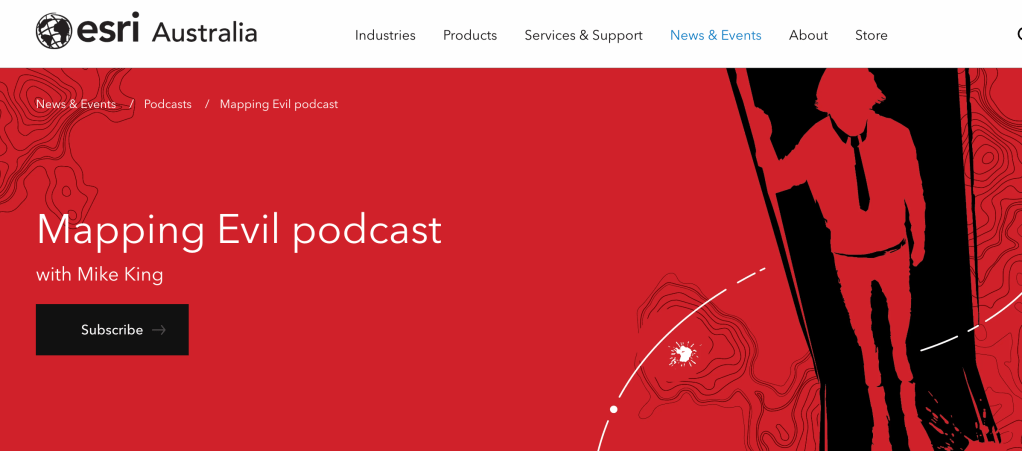
So, keep watching Profiling Evil. We’re just took part in a new 4-part documentary slated for release at the end of 2025 by an Australian production company. It will dive deep into the Outback, into stories of survival, tragedy, and the predators who stalked these vast landscapes.

In the meantime, think of National Missing Persons Week and how it reminds us that every missing person is more than a statistic, they’re someone’s child, sibling, parent, or friend. If you take away one thing, let it be this: awareness creates pressure, and pressure creates leads.
Law enforcement, here in Australia and worldwide must continue embracing partnerships with the true crime community. Together, we can keep these stories alive, uncover new information, and, most importantly, bring people home. Please join me in honoring the missing. Share their stories. Keep asking questions. And never stop looking.
Mike King
Profiling Evil






Leave a Reply