The Colonial Parkway Breakthrough—and the CODIS Problem No One Wants to Talk About
On January 20, 2026, the FBI finally answered a question that families along Virginia’s Colonial Parkway have been asking for nearly forty years: Who did this?
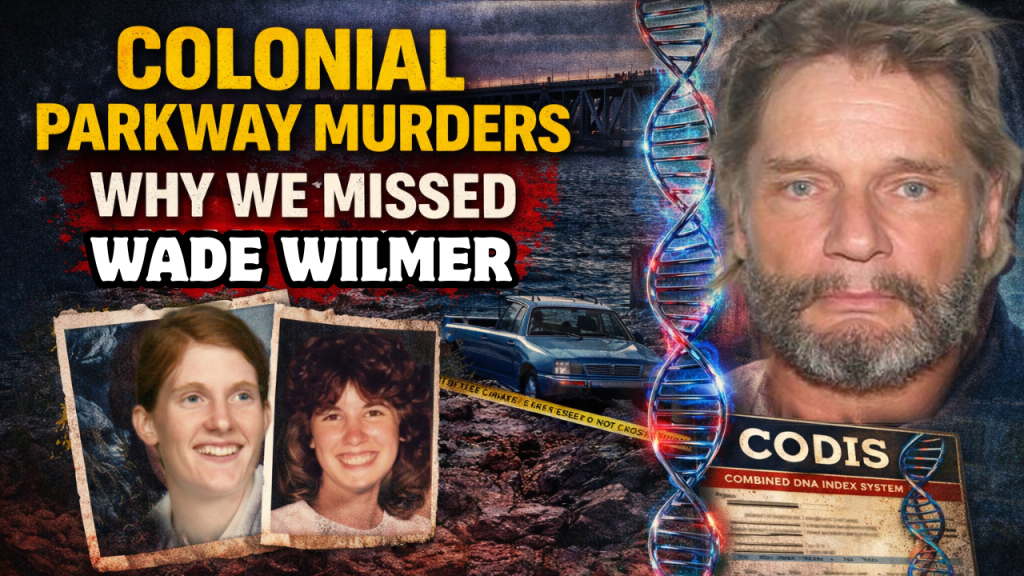
The FBI Norfolk Field Office announced that advances in forensic technology allowed investigators to identify Alan Wade Wilmer Sr. as the man responsible for the 1986 murders of Cathleen Thomas and Rebecca Dowski. Wilmer, who died in 2017, is now linked to at least six murders and disappearances of young people between 1986 and 1989.
That announcement brought long-overdue answers. But it also exposed a problem we need to talk about—because it may explain why this case took decades to resolve.
Wilmer was never convicted of a qualifying crime. And because of that, his DNA was never entered into CODIS, the national DNA database designed to link violent offenders across jurisdictions.
Investigators now believe Wilmer was a serial predator operating across multiple years and locations. Yet the very system meant to identify serial offenders couldn’t legally include him—because CODIS relies heavily on conviction-based eligibility. No conviction meant no profile. No profile meant missed connections.
This isn’t a failure of investigators. It’s a policy problem. CODIS was built to balance public safety and civil liberties, and that balance matters. But when those rules prevent investigators from linking violent crimes that already have DNA evidence sitting in evidence lockers, it’s fair to ask whether the system needs to evolve.
The FBI was clear that if Wilmer were alive today, the evidence would support federal prosecution. That matters. So does the fact that forensic science finally caught up to behavior investigators suspected for years.
And this case isn’t over. The FBI emphasized that January 20 marked an important milestone—but not the end of the work. Other Colonial Parkway–related cases remain under active investigation. Families are still waiting. And justice, while closer, is still incomplete.
If you want more context on Wilmer and why his access to waterways mattered, I strongly encourage you to watch my earlier video, “Serial Killer Boat Captain.” It walks through behavioral patterns, geography, and opportunity that now make a lot more sense in light of this announcement.
Watch it here: https://youtu.be/DQd3IyUeH6I
This case is a reminder of something we talk about often on Profiling Evil: justice isn’t just about finding the right suspect—it’s about having systems that can recognize patterns before decades pass.
Wilmer won’t face a courtroom. But the lessons from this case shouldn’t be buried with him. If we don’t talk honestly about where the system failed—and why—then the next family may be waiting just as long.
And please subscribe to our new podcast, Gardens of Evil: Inside the Zion Society Cult that drops on February 3rd. Listen to the trailer: https://gamutpodcasts.com/show/gardensofevilinsidethezionsocietycult/





 Profiling Evil, LLC
Leave a reply to Candace Plumlee Cancel reply